Milan 2026: a mature market that rewards quality and transformation
Prices at record highs, transactions recovering, negotiation discounts among the lowest in Italy: Milan is a mature, selective market. For investors, the margin no longer lies in simple price growth but in upgrading the property.
Milan · October 2026
Transactions recovering after two years of decline
After the declines of 2023 and 2024, Milan’s residential market has returned to growth.
According to the Nomisma Observatory, Milan recorded 25,173 residential transactions in 2025, up 4.9% on the previous year. The first quarter of 2026 accelerated (+7.1%), while the second held stable.
A distinctive feature of the city is the weight of new-build: newly built homes account for 12.1% of transactions, almost double the national average (6.4%). It is the sign of a city that keeps regenerating its building stock.
According to the FIMAA MiLoMB sentiment survey for the second quarter, about 75% of purchases are for personal use and 25% for buy-to-let investment.
- 25,173
- Transactions in 2025
- +4.9%
- vs. 2024
- +7.1%
- First quarter 2026
- 12.1%
- Share of new-build (Italy: 6.4%)
Prices: slow growth, rigid supply
On prices, Milan is moving cautiously. In the first half of 2026 Nomisma records +0.8% year on year for new homes and +0.9% for existing ones; ISTAT, with a different methodology, indicates +2.4% in the second quarter.
Asking prices in listings show the absolute level: in August 2026 the city average is about €5,665/m² (Immobiliare.it, +2.2% year on year), with a huge gap between districts — from about €3,300/m² in Bisceglie-Baggio-Olmi to over €11,200/m² in the Centre.
The figure that best describes the market’s maturity is the negotiation discount: about 3.5% on new homes and 7% on existing ones, below the national average. Supply is rigid: sellers are in no hurry. Average times are about 4 months to sell and 3 to let.
Rents have slipped slightly (-0.7% year on year) after years of growth, with an average gross yield around 5%.
- €5,665/m²
- Average asking price (Aug. 2026)
- 3.5% / 7%
- Negotiation discount new / existing
- ~5%
- Gross rental yield
Where value is created today
In a market where prices grow 1–2% a year, passive appreciation is not enough to pay for an operation. The margin shifts to transformation.
The most interesting dynamics concentrate in three areas:
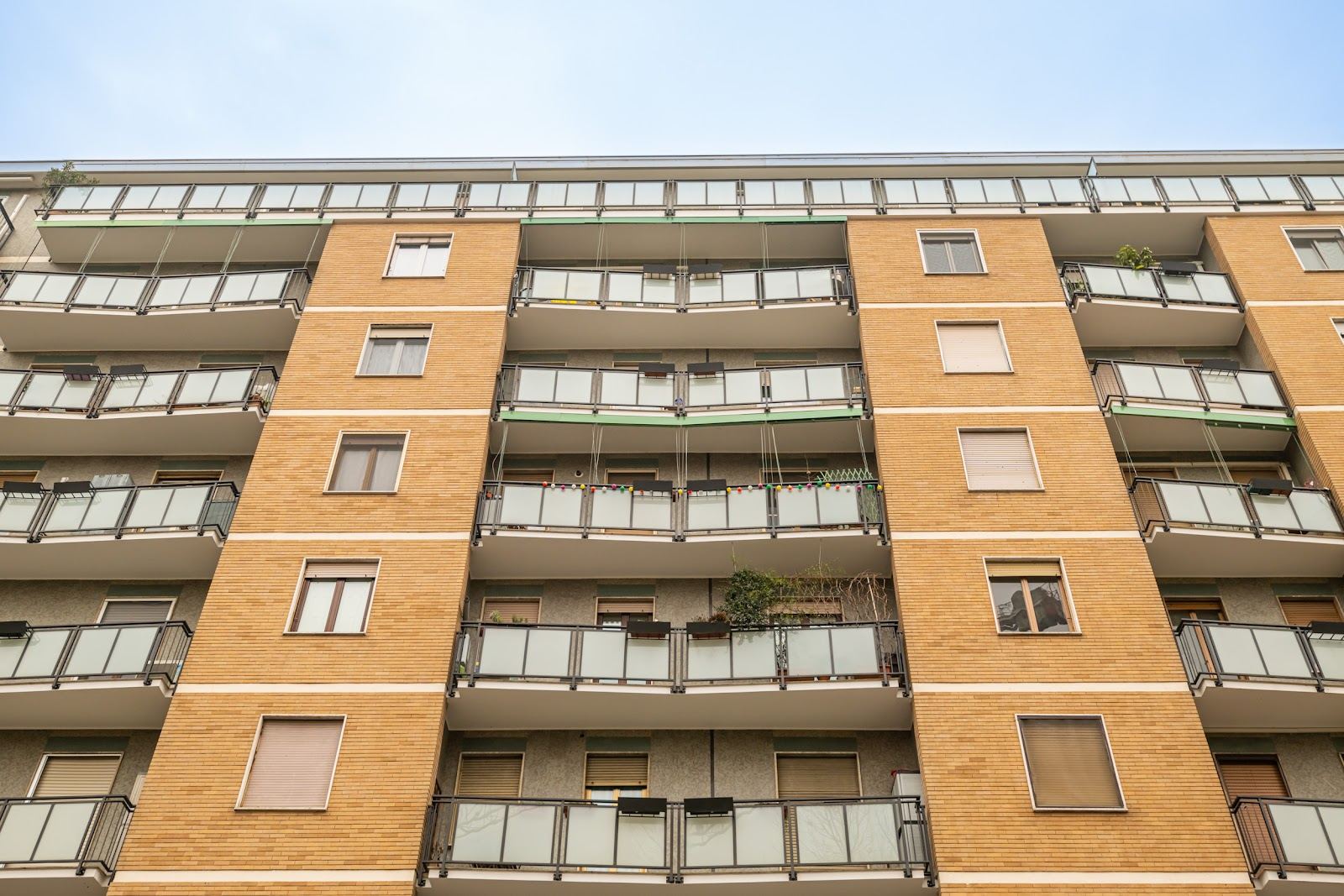
Upgrading existing stock. Much of Milan’s housing was built between the 1950s and 1970s: low energy classes, dated systems, outdated layouts. A well-designed intervention brings the property back into the market band that demand rewards.
Subdivision. Large units in semi-central districts, converted into smaller, saleable sizes, often achieve a higher unit value than the original product.
Regeneration districts. Porta Romana railway yard, Santa Giulia, Bovisa, Rogoredo and Cimiano benefit from infrastructure investment that changes how the neighbourhood is perceived before prices fully catch up.
- Porta Romana
- Santa Giulia
- Bovisa
- Rogoredo
- Cimiano
- Corvetto
Outlook
Observers converge on a scenario of stability: transactions at high levels in the short term, a possible slight slowdown in 2027 and prices growing at a modest pace.
Nomisma itself reports a weakening of the residential performance index in the first half of 2026, with less buoyant purchase demand. This is not a sign of crisis but of selectivity: the market increasingly distinguishes between ready, efficient, well-located properties and ordinary stock in need of renovation.
For those operating on an 18–36 month horizon, this context favours those who buy well, transform with a clear project and sell a finished product in the right band.
A market for those who can transform.
Milan is no longer a market where price does all the work. It is a mature, liquid and selective market, where value is built through micro-location analysis, project quality and control of time and cost.
Micro-location
Between €3,300 and €11,200/m²: the choice of district matters more than the general trend.
Product
The market rewards efficient, finished homes; it penalises stock in need of renovation.
Horizon
18–36 month operations with an exit in the right segment, not passive waiting.
Sources and methodology
Nomisma Real Estate Observatory, H2 2026 (Milan); ISTAT, house prices, Q2 2026; Immobiliare.it Insights and idealista, asking prices August 2026; Agenzia delle Entrate – OMI; FIMAA MiLoMB, Q2 2026 sentiment. Figures are scenarios based on assumptions and do not constitute a promise or guarantee of results.
Read the source